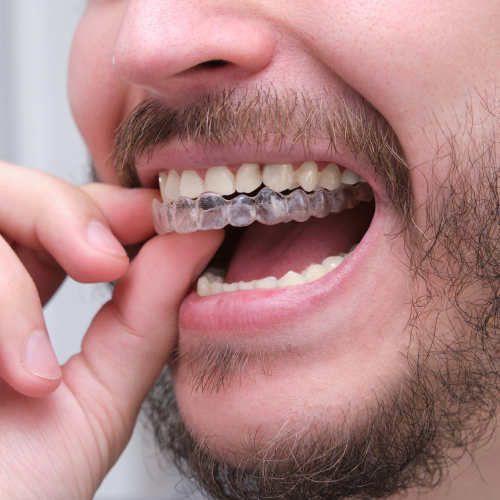
How Does Invisalign Compare to At Home Aligners Like Byte and SmileDirectClub?
Wondering if Byte or SmileDirectClub is as good as Invisalign? Compare at-home aligners with in-office care. Schedule your consultation at Nu Dentistry today!
Read More
Reviewed by Dr. Ali Tameemi, DDS
A lot of people want straighter teeth, but they are not thrilled about the idea of wearing noticeable braces. That hesitation is more common than you might think. You may be ready to improve your smile, fix crowding, or correct your bite, but still want to keep your treatment a little more private.
That is one reason lingual braces continue to stand out.
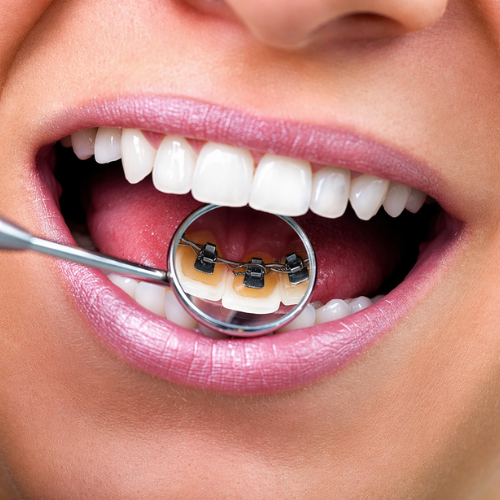
Lingual braces give patients a way to straighten their teeth with a treatment that stays mostly out of sight. Instead of being attached to the front of the teeth, they are placed behind them. That means you can go through orthodontic treatment without the usual look most people associate with braces.
At Nu Dentistry Tanglewood, we know orthodontic treatment is not just about getting results in the end. It is also about how the process fits into your life while you are going through it. For many patients, lingual braces offer a balance of discretion, effectiveness, and confidence. They are not the right fit for everyone, but for the right person, they can be a very appealing option.
Lingual braces are braces that are attached to the back side of the teeth, facing the tongue. They work in a very similar way to traditional braces by using brackets and wires to apply steady pressure that moves teeth into better alignment over time.
The main difference is where they sit. Because they are behind the teeth rather than in front, they are far less noticeable when you smile or talk. For patients who want effective orthodontic treatment without drawing attention to it, that can be a major advantage.
Although the concept is similar to traditional braces, lingual braces tend to feel more customized. The back surfaces of the teeth are different in shape from the front, so treatment planning needs to be precise. That is part of what makes lingual braces such a specialised option.
They can be used to correct a range of orthodontic issues, including crooked teeth, crowding, spacing, and some bite problems. In many cases, they are a strong option for patients who want the power of braces but are not comfortable with a visible appliance.
The treatment process usually starts with a full evaluation. Your provider will examine your teeth, bite, and smile goals to decide whether lingual braces make sense for your case. From there, the braces are placed behind the teeth and adjusted over time as your smile begins to shift into better alignment.
For many adults especially, the biggest appeal is simple. You can straighten your teeth without making braces the first thing people notice about your smile.
This is one of the most common questions patients ask, and the truth is that “better” depends on what you need most from treatment.
For some people, lingual braces feel like the better choice because they are much less visible. That can make a big difference if you work in a professional setting, spend a lot of time speaking with clients, or just prefer a more discreet option. If keeping your orthodontic treatment private is high on your list, lingual braces have a clear advantage.
That said, traditional braces still work extremely well and may be a better fit for some patients. They are often easier to get used to in the beginning because they do not sit against the tongue. They may also be simpler to clean around and, in some cases, more cost-effective.
So the question is not really whether lingual braces are universally better. The better question is whether they are better for you.
If you value discretion and like the idea of straightening your teeth without the look of braces, lingual braces may feel like a great solution. If you would rather choose an option that may be easier to adjust to and maintain, traditional braces might make more sense.
Each treatment has strengths, which is why a one-on-one consultation matters. Your teeth, your bite, your lifestyle, and your comfort level all play a role in finding the right fit. A treatment that is perfect for one patient may not be ideal for another.
That is especially true in orthodontics, where success is not just about moving teeth. It is about choosing a method that you can realistically stick with and feel good about throughout the process.
Lingual braces can be uncomfortable at first, but that does not mean the discomfort lasts the entire time you wear them. Like most orthodontic treatment, there is usually an adjustment period.
The biggest difference with lingual braces is that they sit near the tongue. Because of that, many patients notice irritation, rubbing, or a slightly awkward feeling in the beginning. Some people also experience mild speech changes at first, especially when saying certain sounds. This can feel frustrating in the moment, but it usually improves as the mouth adapts.
There is also the normal pressure that comes with tooth movement. When braces begin shifting teeth, it is common to feel soreness or tightness now and then, especially after adjustments. That part is not unique to lingual braces. It is a normal part of orthodontic treatment.
What tends to surprise patients most is how quickly they often adapt. The first several days may feel strange, and the first couple of weeks may require some patience, but many people settle into the experience more than they expected.
A few small changes can help during that early stage. Softer foods are often more comfortable at first, and keeping up with good oral hygiene becomes especially important. Some patients also find that being mindful while speaking helps them adjust more quickly to the feel of the braces.
So yes, lingual braces can be uncomfortable in the beginning. But for many patients, the discomfort is temporary, manageable, and worth it for a treatment option that stays mostly hidden from view.
Many adults put off orthodontic treatment for years. Sometimes it is because life gets busy. Sometimes it is because braces feel like something they should have done earlier. And sometimes it is because they do not want a visible appliance affecting the way they look at work, in photos, or in everyday conversations.
Lingual braces speak directly to that concern.
They allow patients to improve their smile in a way that feels more private. That can make treatment easier to say yes to, especially for adults who have been thinking about orthodontics for a long time but never quite felt ready.
There is also something reassuring about choosing a treatment that does not require constant awareness of how it looks from the outside. You may still need time to adjust to how it feels, but visually, the braces stay much more discreet. For many patients, that makes the experience feel more comfortable emotionally, not just physically.
Of course, lingual braces are not only for adults. Some younger patients may also be interested in a less visible treatment option. Still, adults are often the ones most drawn to the combination of effectiveness and subtlety that lingual braces can offer.
Not always. While lingual braces can be an excellent option, they are not ideal for every smile or every patient preference.
Some cases may be better suited to traditional braces or clear aligners depending on the type of movement needed, the shape of the teeth, oral habits, and overall treatment goals. Comfort preferences matter too. Some patients are willing to adjust to the feel of braces behind the teeth because they want the discreet look. Others decide they would rather choose a different option.
That is why the best next step is not guessing. It is getting a professional evaluation.
A proper consultation can help you understand whether lingual braces are likely to work well for your situation, how long treatment may take, and what kind of day-to-day experience you can expect. That conversation can save you a lot of uncertainty and help you make a confident choice.
If you have been interested in braces but hesitant about how visible they might be, lingual braces may be worth a closer look. They offer a unique way to straighten teeth while keeping treatment more private, which can be a huge benefit for patients who want results without the spotlight.
They are not the perfect option for everyone, but they can be an excellent one for the right person. When chosen carefully and planned properly, lingual braces can improve both the appearance and function of your smile while helping you feel more comfortable during treatment.
If you are curious whether lingual braces are a good fit for your needs, schedule an appointment with Nu Dentistry Tanglewood. Our team can evaluate your smile, talk through your options, and help you find the orthodontic treatment that makes the most sense for you.
Fresh news from the dental world




SEE WHAT A VISIT TO OUR MODERN, STATE-OF-THE-ART DENTIST OFFICE IS LIKE!


Monday - Friday 9am - 6pm
Saturday 9am - 3pm
Sunday Closed
Check out what our patients are saying in Houston, TX


“Never Thought I'd Say It”
I never thought I’d say it, but going to the dentist is actually fun now. I recently came in for a root canal, and I got to sit back and catch up on Stranger Things without any pain!

“Anxiety Has Kept Me Away ”
I usually have such huge anxiety when I go to a dentist appointment, which means I always put off visits until the last minute to disastrous consequences. However, Dr. Loggins helped me with sedation, so the entire process was a breeze!

“The Best Dentist In Houston”
We have been looking for a family dentist for a long time. Not too long ago we met Dr. Ali. Not only was he professional, kind, and gentle, but he always finds a way to fit us in when we need an appointment. He’s also pretty funny! I appreciate that he takes the time to explain what he’s doing, before he does it. That really puts me at ease.

“Part Of The Family”
When I come in for an exam, Dr. Alrajab makes me feel like I’m a part of his family. I haven’t had a single cavity or filling done since I started coming here, which is a real change from my last hygienist.
“Never Thought I'd Say It”
I never thought I’d say it, but going to the dentist is actually fun now. I recently came in for a root canal, and I got to sit back and catch up on Stranger Things without any pain!
“Anxiety Has Kept Me Away ”
I usually have such huge anxiety when I go to a dentist appointment, which means I always put off visits until the last minute to disastrous consequences. However, Dr. Loggins helped me with sedation, so the entire process was a breeze!
We are proud members of these dental organizations and accreditations


Check us out and follow our Houston, TX practice on social media...


