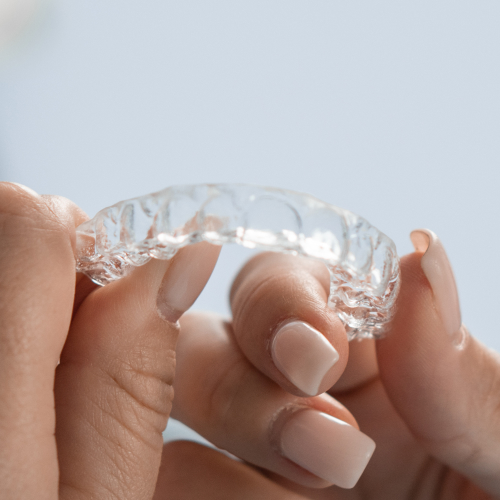
Spark vs. Invisalign vs. Ceramic Braces: What Houston Patients Need to Know
Comparing Spark vs. Invisalign vs. ceramic braces in Houston? Discover costs, benefits, and which orthodontic treatment is best for your smile. Book today!
Read More
Medically Reviewed by Dr. Ali Tameemi
Spark and Invisalign are both highly effective clear aligner systems, but they differ in material science and refinement policies. Ceramic braces bring their own set of maintenance and repair considerations. The right choice depends on your case complexity, lifestyle, and how well you understand what's actually included in each treatment package.
Most comparisons stop at "both are clear plastic." That sells both systems short — and leaves patients without the information they need.
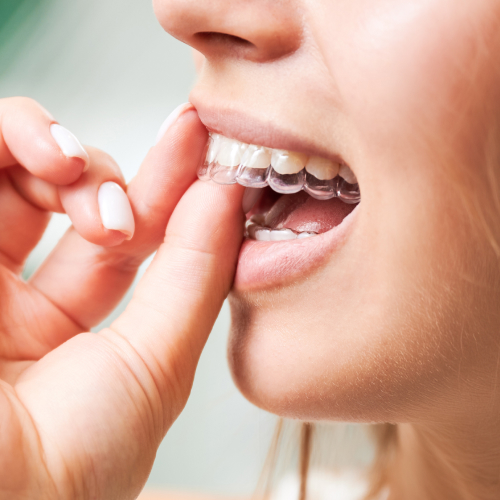
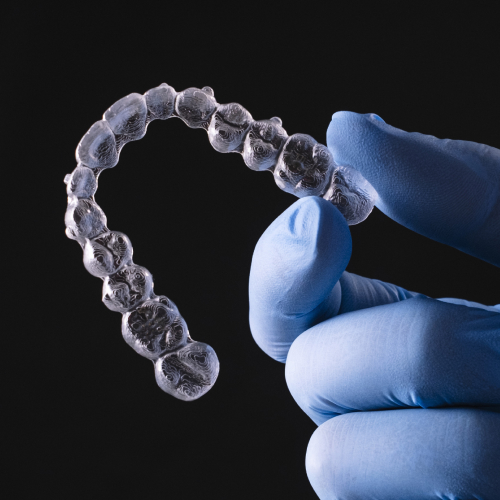
Invisalign uses SmartTrack®, a multilayer thermoplastic elastomer designed to apply consistent, controlled force across the tooth surface. It's the material that made Invisalign the dominant brand for over two decades, and according to Healthline's overview of Invisalign, the aligners are engineered to fit tightly while remaining flexible enough for daily removal. For patients also managing other dental health concerns, staying current with a cleaning and exam is especially important during orthodontic treatment.
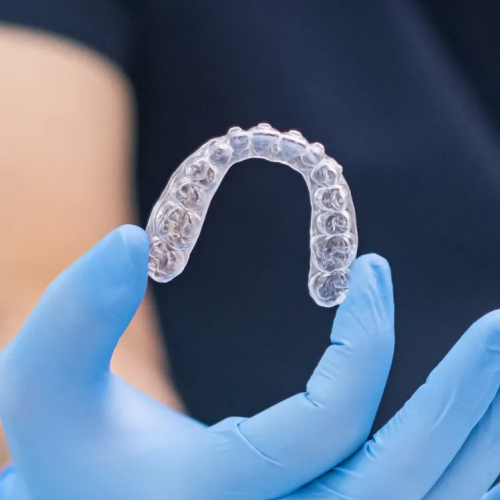
Spark, made by Ormco, uses TruGEN™ — a newer polymer that the manufacturer claims is optically clearer and more stain-resistant than SmartTrack®. This matters practically. If you drink coffee or eat turmeric-heavy foods regularly, the difference in surface porosity between these two materials becomes visible within weeks. TruGEN™ has a denser molecular structure that resists pigment absorption more effectively, which means Spark trays tend to stay clearer longer between meals.
The other underappreciated difference is trim line design. Invisalign uses a scalloped margin that follows the gumline, which distributes forces across a broader surface. Spark uses a straight-line, scalloped-free trim. Clinically, the straight trim edge maintains more consistent contact force against each tooth, which some orthodontists associate with better tray seating — particularly on posterior teeth that are harder to engage. Using aligner chewies, as described by Healthline, helps both systems seat properly, but the Spark straight-edge design may require less corrective effort to achieve full contact.
Neither material is universally superior. For complex cases, your orthodontist's experience with the system often matters more than polymer chemistry. But if aesthetics during treatment are your top priority, Spark's material properties give it a measurable edge.
Here's where patients consistently get surprised mid-treatment, and it's worth understanding before you sign anything.
Invisalign Comprehensive includes up to five years of unlimited refinement trays. That means if your teeth don't track as planned — which happens regularly, since biological tooth movement is unpredictable — your provider can order additional aligner sets within the package terms. This is significant protection for complex cases.
Spark uses a tiered model: Spark 10, Spark 20, and Spark Advanced. Each tier caps the number of aligner stages included. If your teeth don't finish tracking within your purchased tier, additional trays require a new order. Whether that requirement applies to you depends entirely on how your provider structured the original agreement.
WebMD notes that adults represent one in three orthodontic patients, and the refinement structure is where patients need to ask direct questions.
Before choosing your treatment package, ask: What happens if I need more trays than the package covers? The answer determines what is included in your plan upfront.
Comparisons between ceramic braces and clear aligners often miss the broader maintenance picture — what happens when something breaks or needs repair.
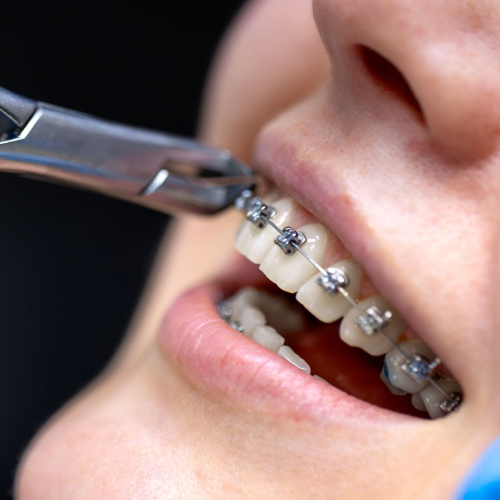
Healthline's overview of ceramic braces notes that ceramic brackets are more than twice as likely to fracture compared to metal. When a ceramic bracket breaks, it cannot simply be rebonded — the entire bracket must be replaced. Patients who play contact sports, grind their teeth, or eat harder foods can face multiple repair visits throughout treatment. In some cases, bracket fractures or wire injuries can escalate into a dental emergency that requires prompt attention.
The elastic ligatures used to hold the wire to ceramic brackets are also prone to staining. Unlike the bracket itself, these ties are replaced at each adjustment appointment — but if you stain them badly between visits, the discoloration is visible until that next appointment. Brackets positioned against opposing teeth can also cause enamel wear on the opposing surface, a complication that rarely appears in ceramic braces marketing.
Clear aligners carry their own mid-treatment considerations. Lost or broken trays require replacement sets, and treatment may pause or regress while the replacement is manufactured. As Healthline explains in its aligner comparison, aligners are not appropriate for every malocclusion type, which means patients who start with aligners and later need to switch to braces face adjustments to their treatment plan.
The practical takeaway: ceramic braces suit patients who want fixed, compliance-free treatment and have lower fracture risk. Aligners suit patients who prioritize aesthetics and are disciplined about wear time. The right choice depends on how your specific case unfolds.
Case complexity is the deciding factor that overrides material preferences and brand loyalty.
Both Spark and Invisalign treat crowding, spacing, and mild-to-moderate bite issues effectively. Healthline's adult braces overview confirms that clear aligners handle most standard malocclusion cases well, and treatment timelines are comparable to conventional braces for moderate complexity. Severe skeletal discrepancies, significant overbites, or cases requiring tooth extraction and complex repositioning still favor traditional or lingual braces, where the orthodontist has more precise mechanical control.
Age is rarely a barrier. Adults make up a significant and growing share of orthodontic patients, and clear aligners work on mature bone just as effectively — though treatment may take longer than it would for a teenager, since adult bone remodels more slowly. Patients with gum disease gingivitis should have that addressed before beginning any orthodontic treatment, as active periodontal issues can complicate tooth movement and outcomes.
For Houston patients in Tanglewood, Uptown, and the surrounding areas, the best starting point is a thorough 3D imaging consultation. That scan determines whether your case falls within aligner range, and which system — Spark, Invisalign, ceramic, or conventional — gives your teeth the most predictable path to alignment. Patients who experience dental anxiety during consultations or procedures may also want to ask about dental sedation options to make the process more comfortable.
The difference between Spark and Invisalign isn't just marketing — it's material science, refinement structure, and how your provider packages both. Nu Dentistry Tanglewood works with Houston patients across Tanglewood, Uptown, and beyond to match the right orthodontic system to each individual case. If you're also considering ways to enhance your smile beyond alignment, porcelain veneers are a popular option to discuss alongside your orthodontic plan. Schedule a consultation to get a clear picture of your options, your timeline, and what's actually included in your treatment.
Medical disclaimer: This article is for informational purposes only and does not constitute medical or dental advice. Consult a licensed dental professional for diagnosis and treatment recommendations specific to your situation.
Fresh news from the dental world

SEE WHAT A VISIT TO OUR MODERN, STATE-OF-THE-ART DENTIST OFFICE IS LIKE!


Monday - Friday 9am - 6pm
Saturday 9am - 3pm
Sunday Closed
Check out what our patients are saying in Houston, TX


“Never Thought I'd Say It”
I never thought I’d say it, but going to the dentist is actually fun now. I recently came in for a root canal, and I got to sit back and catch up on Stranger Things without any pain!

“Anxiety Has Kept Me Away ”
I usually have such huge anxiety when I go to a dentist appointment, which means I always put off visits until the last minute to disastrous consequences. However, Dr. Loggins helped me with sedation, so the entire process was a breeze!

“The Best Dentist In Houston”
We have been looking for a family dentist for a long time. Not too long ago we met Dr. Ali. Not only was he professional, kind, and gentle, but he always finds a way to fit us in when we need an appointment. He’s also pretty funny! I appreciate that he takes the time to explain what he’s doing, before he does it. That really puts me at ease.

“Part Of The Family”
When I come in for an exam, Dr. Alrajab makes me feel like I’m a part of his family. I haven’t had a single cavity or filling done since I started coming here, which is a real change from my last hygienist.
“Never Thought I'd Say It”
I never thought I’d say it, but going to the dentist is actually fun now. I recently came in for a root canal, and I got to sit back and catch up on Stranger Things without any pain!
“Anxiety Has Kept Me Away ”
I usually have such huge anxiety when I go to a dentist appointment, which means I always put off visits until the last minute to disastrous consequences. However, Dr. Loggins helped me with sedation, so the entire process was a breeze!
We are proud members of these dental organizations and accreditations


Check us out and follow our Houston, TX practice on social media...


