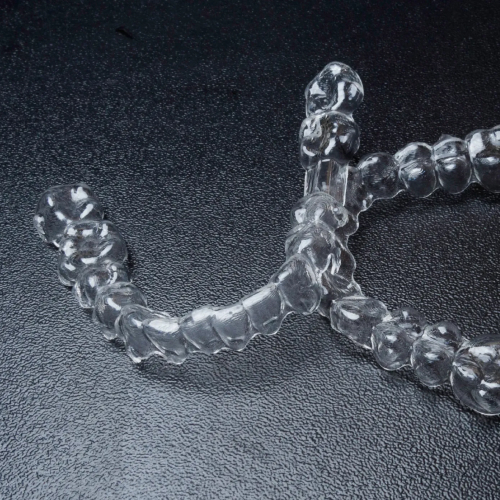
Clear Aligners: Invisalign vs Spark vs SureSmile Comparison
Compare clear aligners cost: Invisalign vs Spark vs SureSmile. Learn which option is cheaper and best for your smile. Book your Houston consultation today!
Read More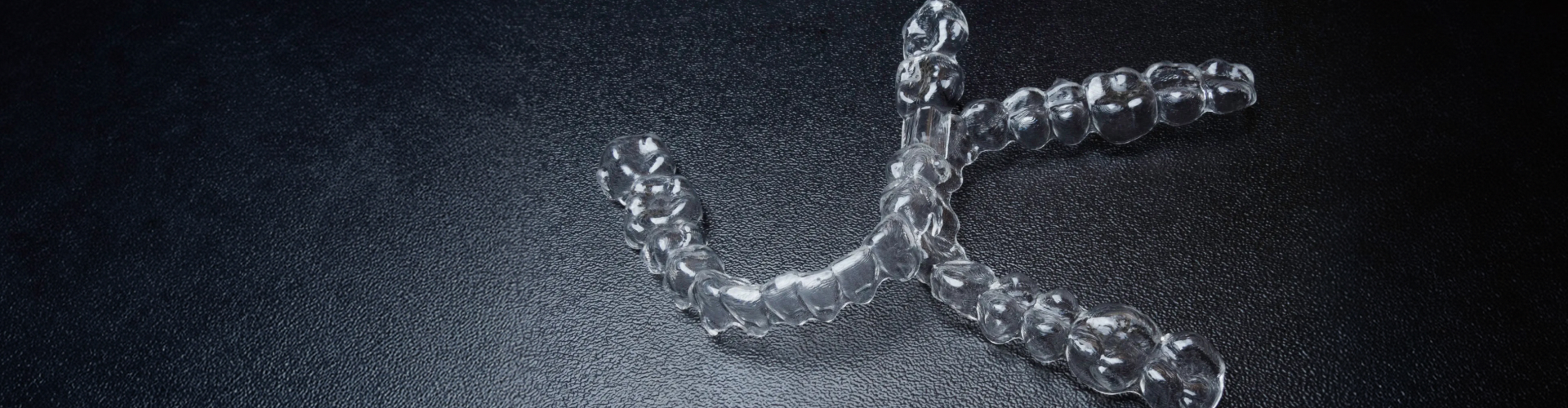
Medically Reviewed by Dr. Ali Tameemi
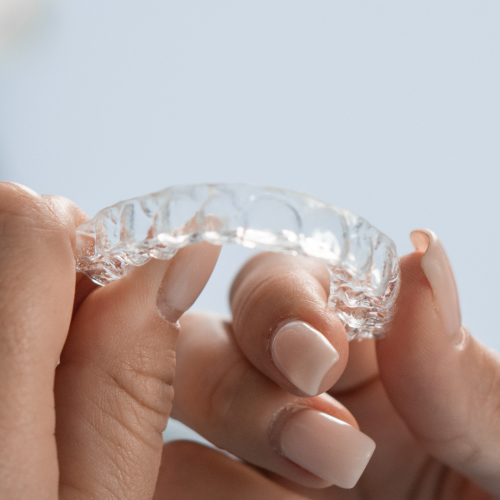
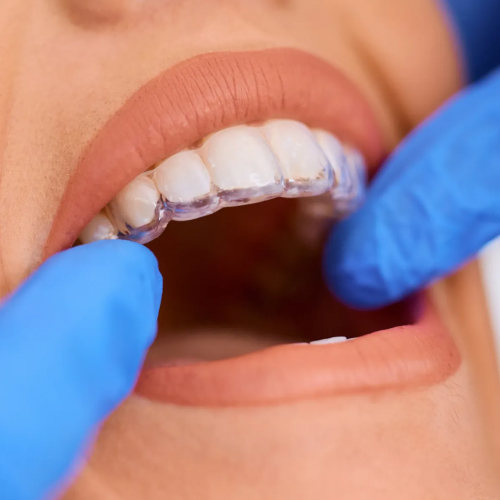
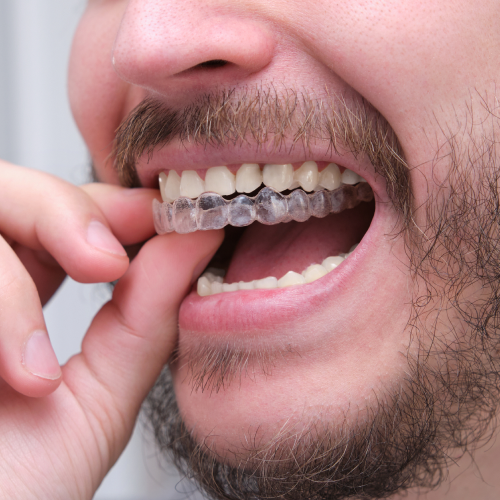
Invisalign, Spark, and SureSmile are three leading clear aligner systems that differ in manufacturing approach, refinement policies, and how lab fees flow through to patients. Understanding those differences — not just the brand names — helps you ask smarter questions before committing to treatment.
Most patients research clear aligner brands expecting to find a straightforward price list. What they find instead are wide ranges that seem impossible to compare. For Houston-area patients, part of the confusion comes from a structural reality of how orthodontic treatment is billed.
Orthodontists typically charge a bundled procedural fee for "comprehensive clear aligner therapy" regardless of which plastic brand they use. Align Technology (Invisalign) uses volume-tiered wholesale pricing, meaning high-volume practices pay meaningfully less per case than lower-volume ones. Competing brands like Ormco's Spark have pursued competitive flat lab rates to attract doctors away from Invisalign. In theory, a doctor who pays less in lab fees could pass some of those savings to patients — but that transfer is not automatic. Unless a patient asks directly before treatment planning begins, a substantial lab-side difference between brands rarely shows up as a patient discount. The fee you're quoted reflects overhead, clinical time, and the practice's pricing model far more than the lab invoice.
The practical takeaway: brand comparison shopping matters less than having a transparent conversation with your provider about what the bundled fee includes — and whether the brand choice influences what you'll pay. Our aesthetic dentistry services can help you explore all your options in a single consultation.
Clear aligner treatment doesn't always go perfectly. Teeth sometimes stop tracking — meaning they drift from the planned position — and mid-course corrections require new trays. This is where the fine print between brands creates real financial divergence.
Invisalign Comprehensive includes five years of unlimited refinements under its standard package. That warranty matters for complex cases that may need two or more correction phases. Spark's tiered system — Spark 10, Spark 20, and Spark Advanced — ties refinement eligibility to which tier was originally prescribed. A case planned under a shorter-arc tier that turns out to need additional movement may require an upgrade fee. SureSmile similarly offers a Complete package alongside a "pay-per-aligner" Select structure, which can look attractive for straightforward cases but adds up quickly if the case requires additional staged trays.
Consider a scenario: a patient selects a Spark 20 or SureSmile Select plan initially. Nine months in, tracking issues arise and a full refinement phase is needed. The additional adjustments can alter the overall scope versus an Invisalign Comprehensive plan that covered the same correction at no added charge.
As Healthline notes, the complexity of your orthodontic issues significantly affects how well any aligner system performs, which makes refinement coverage a critical variable rather than a fine-print footnote. Patients dealing with more severe misalignment may also want to discuss options like porcelain veneers for cosmetic concerns that aligners alone may not fully address.
SureSmile pricing online appears erratic compared to Invisalign and Spark, and the reason is structural. SureSmile operates on an open-platform workflow. Rather than manufacturing every tray at a centralized factory and shipping them to the practice, SureSmile allows clinicians to design treatment digitally and then 3D-print staged trays directly in-office using dental resins. This bypasses centralized manufacturing and shipping costs entirely.
For minor relapse cases or anterior-only corrections — situations where only the front teeth need adjustment — in-office printing can streamline the treatment workflow compared to factory-exclusive brands. For comprehensive full-arch cases, the calculus changes, because the doctor's in-house equipment, material costs, and chair time all factor in differently than they would with a turnkey factory product.
This is why two SureSmile quotes from two different practices can look dramatically different. One practice is running a full factory-order workflow. Another is printing trays chairside. Neither is cutting corners — the clinical outcome can be equivalent — but the fee structures are genuinely different products.
WebMD points out that adult patients often have pre-existing dental conditions that extend treatment timelines, which makes understanding the full scope of a treatment plan — including what manufacturing model is being used — especially important before signing off. Addressing underlying issues like gum disease or cavity fillings before starting aligner therapy is often a necessary first step.
Brand selection is secondary to case complexity. A Healthline overview of Invisalign notes that clear aligners are well-suited for crowding, spacing, and mild to moderate bite issues, but that more complex cases may require additional tools. Healthline's breakdown of Invisalign rubber bands explains that elastics are often added to correct overbites, underbites, and open bites — and that applies across Invisalign, Spark, and SureSmile alike.
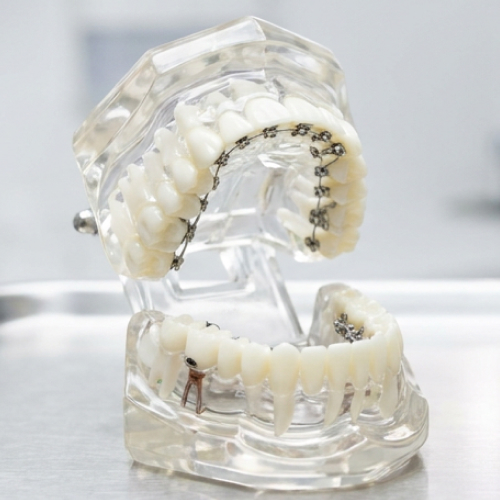
After treatment ends, retention matters just as much as the aligner brand. Healthline's guide to permanent retainers outlines how bonded lingual wires — often used on lower teeth — work alongside removable retainers to hold alignment results long-term. Retainer type should be part of any treatment planning conversation, regardless of which aligner brand is used. Keeping up with routine cleaning and exam appointments throughout your aligner treatment also helps ensure your teeth and gums stay healthy as your smile shifts.
The reality is that your overall experience depends on your case complexity, your provider's lab relationships, the refinement tier prescribed, and whether in-office printing is part of the workflow. Asking those specific questions upfront — rather than comparing brand names online — is the move that ensures you find the right fit.
If you're weighing Invisalign, Spark, or SureSmile and want a clear picture of what treatment would actually involve for your specific case, Nu Dentistry Tanglewood is ready to help. Serving patients throughout Houston, Texas — including Tanglewood and Uptown — our team can walk you through candidacy, brand options, and what comprehensive treatment planning looks like before you commit to anything. We also offer professional teeth whitening to help you finish your smile transformation on a bright note.
Medical disclaimer: This article is for informational purposes only and does not constitute medical or dental advice. Always consult a licensed dental professional for diagnosis and treatment recommendations specific to your situation.
Fresh news from the dental world
SEE WHAT A VISIT TO OUR MODERN, STATE-OF-THE-ART DENTIST OFFICE IS LIKE!
Monday - Friday 9am - 6pm
Saturday 9am - 3pm
Sunday Closed
Check out what our patients are saying in Houston, TX


“Never Thought I'd Say It”
I never thought I’d say it, but going to the dentist is actually fun now. I recently came in for a root canal, and I got to sit back and catch up on Stranger Things without any pain!

“The Best Dentist In Houston”
We have been looking for a family dentist for a long time. Not too long ago we met Dr. Ali. Not only was he professional, kind, and gentle, but he always finds a way to fit us in when we need an appointment. He’s also pretty funny! I appreciate that he takes the time to explain what he’s doing, before he does it. That really puts me at ease.

“Anxiety Has Kept Me Away ”
I usually have such huge anxiety when I go to a dentist appointment, which means I always put off visits until the last minute to disastrous consequences. However, Dr. Loggins helped me with sedation, so the entire process was a breeze!

“Part Of The Family”
When I come in for an exam, Dr. Alrajab makes me feel like I’m a part of his family. I haven’t had a single cavity or filling done since I started coming here, which is a real change from my last hygienist.
“Never Thought I'd Say It”
I never thought I’d say it, but going to the dentist is actually fun now. I recently came in for a root canal, and I got to sit back and catch up on Stranger Things without any pain!
“The Best Dentist In Houston”
We have been looking for a family dentist for a long time. Not too long ago we met Dr. Ali. Not only was he professional, kind, and gentle, but he always finds a way to fit us in when we need an appointment. He’s also pretty funny! I appreciate that he takes the time to explain what he’s doing, before he does it. That really puts me at ease.
We are proud members of these dental organizations and accreditations


Check us out and follow our Houston, TX practice on social media...


