Medically Reviewed by Dr. Ali Tameemi
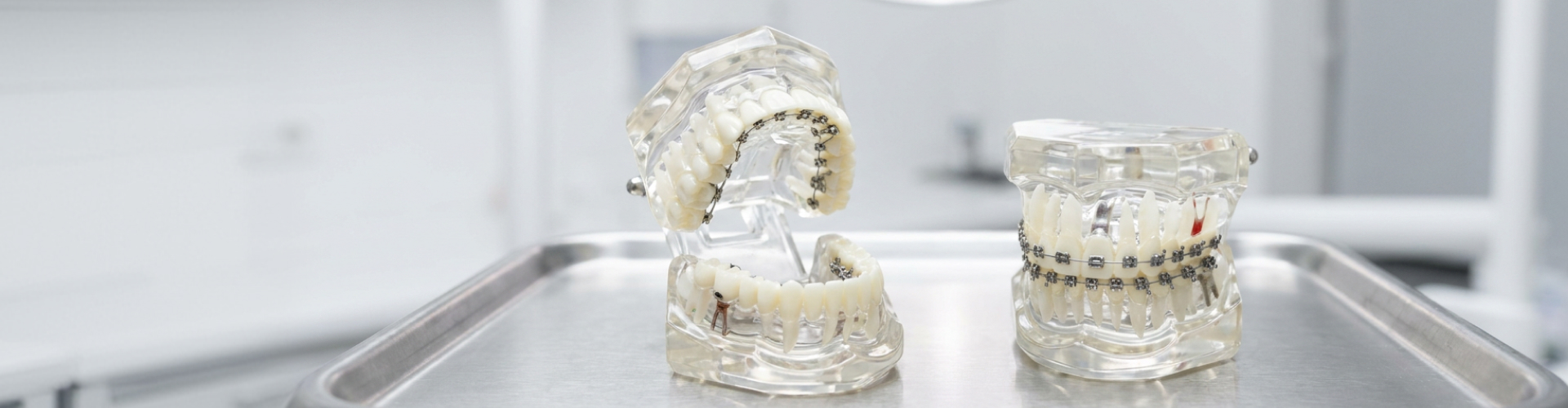
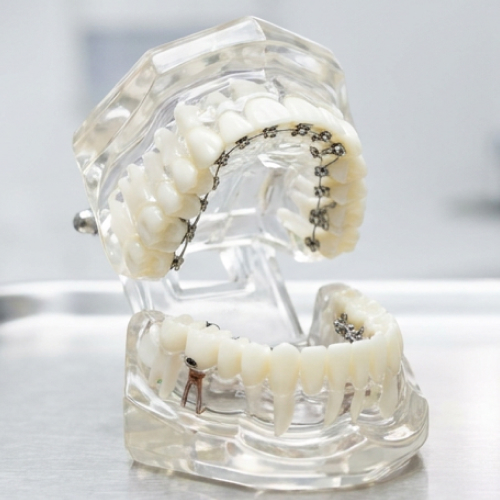
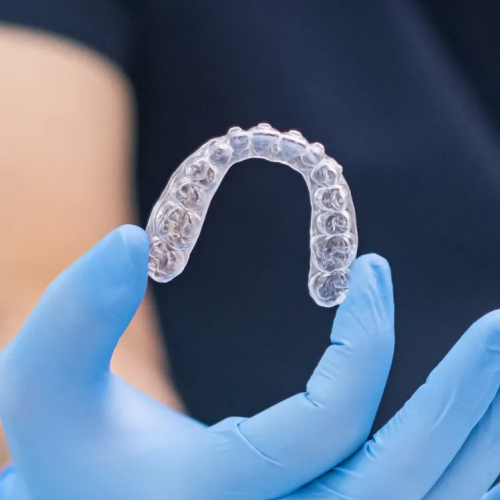
Lingual braces are bonded to the back of your teeth — making them nearly invisible — but they come with real mechanical, biological, and provider-supply trade-offs that most guides skip entirely. Understanding these differences helps you walk into your orthodontic consultation prepared to ask the right questions.
Why Fewer Than 10% of Orthodontists Even Offer Lingual Braces
Most people assume lingual braces are rare because patients don't want them. The real barrier is practitioner supply.
Lingual orthodontics demands a completely different skill set from standard residency training. Brackets are bonded indirectly using custom transfer trays, archwire bends must be visualized in reverse, and the working field is cramped and poorly lit. Clinicians routinely report neck and back strain from the sustained awkward positioning required — ergonomic burdens that don't exist with labial (front-facing) brackets. Chairside adjustment appointments run nearly double the time compared to conventional braces.
The result: the vast majority of orthodontists offer lingual braces occasionally at best, or not at all. Before committing, ask specifically how many lingual cases a provider completes per year. A high-volume lingual specialist treats it as a primary technique — not a niche add-on.
According to a Healthline overview, not all orthodontists are trained to apply lingual braces, and patients interested in this option should raise it early in the consultation process. That's not a minor footnote — it meaningfully limits your options in any given city, including Houston. For patients exploring all their aesthetic dentistry options, understanding provider availability is a critical first step.
The Biology Problem Nobody Mentions: Calculus Buildup Behind Your Teeth
Generic guides warn that lingual braces are "harder to clean." That undersells the issue significantly.
Your lower lingual arch sits directly adjacent to the openings of the submandibular and sublingual salivary glands — Wharton's ducts. These glands continuously bathe the lower back surfaces of your teeth in calcium- and phosphate-rich saliva. That mineral-dense environment accelerates plaque mineralization into hardened calculus (tartar) at a substantially faster rate than on front-facing brackets.
Why does this matter clinically? Calculus buildup around lingual brackets can compromise the bond between the bracket and enamel, increasing the risk of brackets popping off — especially in patients already prone to deep overbites, where WebMD notes bracket dislodgement is already a documented concern.
Standard brushing technique doesn't adequately reach this zone. Effective home care for lingual appliances specifically requires:
- Sulcabrush-style interdental brushes angled to access the lingual gumline
- Rubber-tip stimulators to displace debris from around bracket bases
- Tartrolytic or anti-calculus rinses (pyrophosphate-containing mouthwashes) used consistently to slow mineral deposition
- More frequent professional cleanings — typically every 8–10 weeks rather than the standard 6-month interval, making regular cleaning and exam appointments especially important
Patients who commit to this regimen see dramatically better outcomes. Those who don't often face avoidable debonding events that extend treatment time. Neglecting oral hygiene during orthodontic treatment can also increase the risk of gum disease gingivitis, which is harder to manage around lingual hardware.
The Physics of Why Lingual Braces Excel at Some Corrections — and Struggle With Others
Treatment duration comparisons between lingual and traditional braces rarely explain the underlying mechanics. Here's what's actually happening.
The lingual perimeter of the dental arch is measurably shorter than the labial (outer) perimeter. That shorter distance between brackets — called interbracket distance — has an exponential effect on archwire stiffness. Wire stiffness scales roughly with the inverse cube of bracket spacing, meaning even a small reduction in interbracket distance produces a dramatically stiffer wire segment. Stiffer wires are harder to control with precision.
This has practical consequences. Lingual braces are mechanically well-suited for:
- Anterior retraction (pulling front teeth back)
- Bite opening in deep overbite cases
- Overall arch leveling
They are comparatively less efficient at:
- Severe premolar rotations, where precise force vectors over short distances are difficult to achieve
- Root torque adjustments, which require fine biomechanical control that shorter interbracket distances complicate
A Healthline article on adult braces confirms that lingual braces work just as quickly as conventional braces in many scenarios — but that statement applies most cleanly to cases that align with lingual mechanics' strengths. Complex rotation cases may genuinely take longer. In some situations, a tooth crown or other restorative work may need to be coordinated alongside orthodontic treatment, depending on the patient's existing dental health.
This is also why case selection matters. An experienced lingual specialist will identify upfront whether your specific tooth movement goals are well-matched to lingual mechanics — or whether a hybrid approach or alternative might serve you better.
Lingual vs. Traditional Braces: Honest Trade-Offs Side by Side
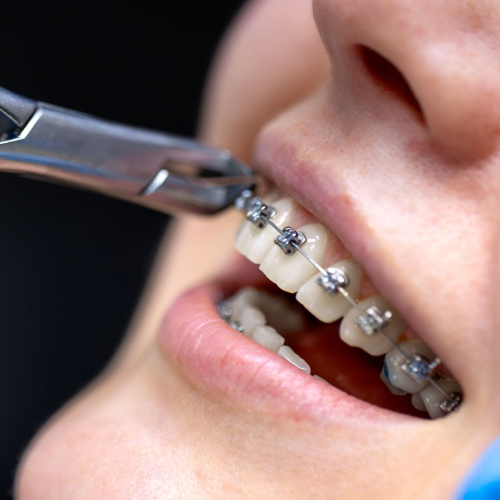
Both systems use brackets, archwires, and periodic adjustments. Both can correct alignment issues that have bothered patients for years. As WebMD explains, one in four orthodontic patients is already an adult — and many more adults avoid treatment entirely because of how conventional braces look.
Lingual braces solve the visibility problem completely. The hardware sits behind your teeth; no one sees it unless you open wide. For working professionals, performers, and anyone in Houston's client-facing industries, that matters. Patients who prioritize smile appearance often also explore options like porcelain veneers as part of a broader smile transformation plan.
The real disadvantages worth weighing honestly:
- Speech adjustment period: The tongue contacts lingual brackets directly, producing a temporary lisp. Most patients adapt within two to four weeks, but the adjustment is real.
- Initial discomfort: Studies on pain outcomes vary, but tongue irritation from lingual brackets is a consistent early complaint — distinct from the lip and cheek soreness associated with labial braces.
- Provider access: As covered above, finding a qualified high-volume lingual provider requires more research than finding a general orthodontist.
- Oral hygiene demands: The calculus risk near salivary duct openings requires a more disciplined home-care routine than conventional braces.
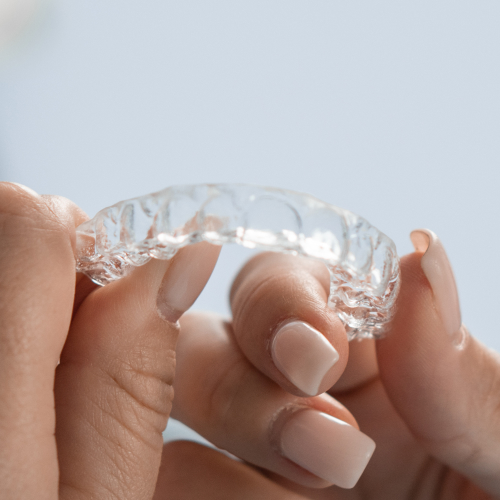
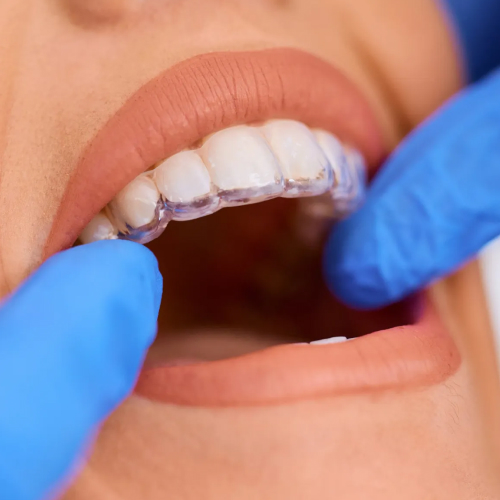
Self-ligating braces represent a middle ground worth knowing about. A Healthline overview of self-ligating braces notes they use a built-in clip mechanism instead of elastic ties, which can shorten adjustment visits and may reduce some friction-related discomfort — though they remain front-facing and visible.
Neither system is universally better. The right answer depends on your specific tooth movement goals, your oral hygiene habits, and whether a qualified lingual provider practices near you.
Talk to Nu Dentistry Tanglewood About Your Options
If you're weighing lingual braces against traditional options in Houston, the most important step is a consultation with a provider who can evaluate your specific case — not a general comparison article.
Nu Dentistry Tanglewood serves patients across Greater Houston, including Tanglewood and Uptown. Our team can walk through your candidacy, explain which tooth movements your case involves, and help you understand what your orthodontic journey would realistically look like. We also offer dental sedation for patients who experience anxiety around dental procedures, ensuring your visits are as comfortable as possible. Reach out to schedule a consultation today.
Medical disclaimer: This article is intended for informational purposes only and does not constitute professional dental or medical advice. Always consult a licensed dental provider for diagnosis and treatment recommendations specific to your situation.