Clear Aligners: Invisalign vs Spark vs SureSmile Comparison
Compare clear aligners cost: Invisalign vs Spark vs SureSmile. Learn which option is cheaper and best for your smile. Book your Houston consultation today!
Read More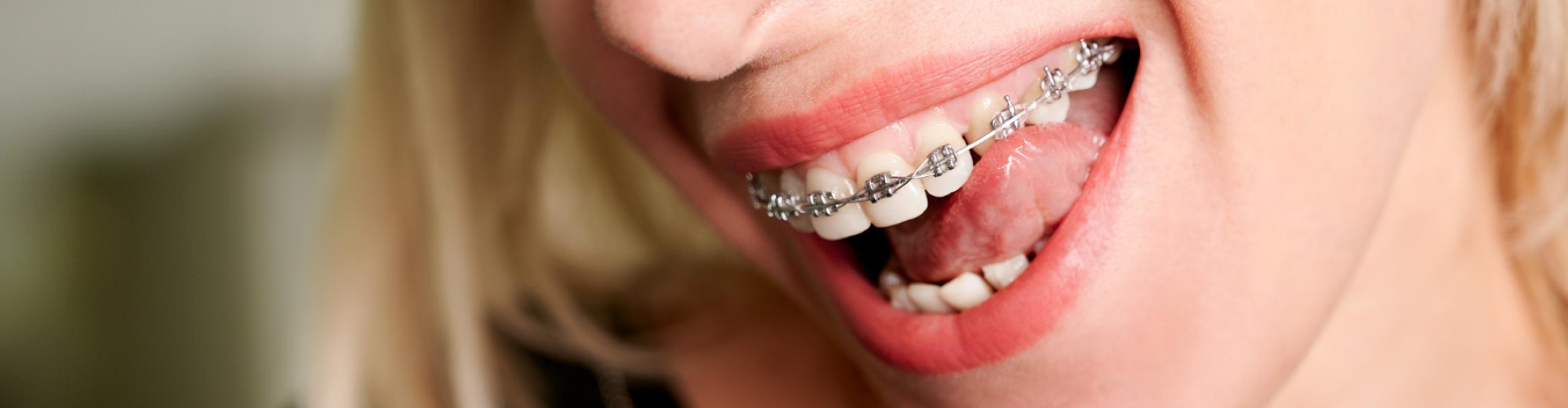
Medically Reviewed by Dr. Ali Tameemi
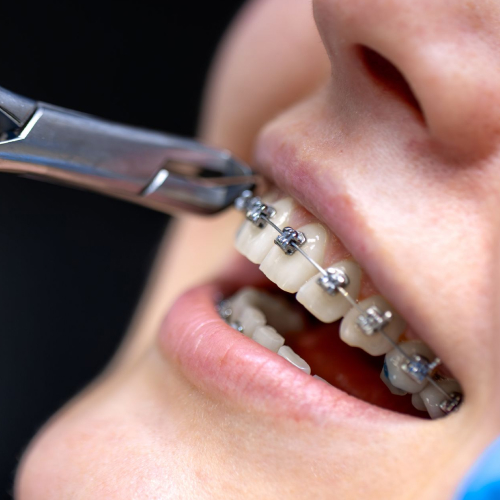
Traditional braces remain one of the most effective tools for correcting misalignment, bite issues, and crowding — at any age. But before committing, it helps to understand what adjustments actually feel like, which wire types cause more discomfort, and how braces temporarily reshape the way you speak.
Most braces articles mention "a slight lisp" and move on. That's not enough — especially if you're a Houston professional with client meetings, presentations, or depositions on your calendar.
Here's what's actually happening: brackets project outward from your teeth, altering the airflow channel your tongue uses to form sounds. The most affected phonemes are lingual and alveolar fricatives — specifically /s/, /z/, /th/, /ch/, and /sh/. Your tongue has spent decades hitting precise contact points. Suddenly, there's hardware in the way.
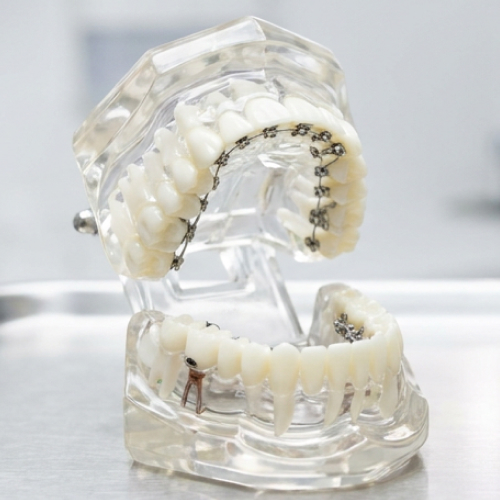
Lingual braces (mounted behind the teeth) tend to produce the most noticeable speech disruption because the brackets sit directly in the tongue's path. According to WebMD, lingual appliances affect tongue movement in ways that labial braces don't, which explains why the adjustment period feels more pronounced.
The good news: your tongue is a muscle, and muscle memory can be retrained quickly. A practical 72-hour protocol used by speech-language pathologists involves reading aloud from a standardized passage (the "Rainbow Passage" is a clinical staple) for 10 minutes, three times daily. Pair that with deliberate over-enunciation drills — exaggerating /s/ and /z/ sounds until your tongue learns its new contact geometry. Most patients report intelligible, natural-sounding speech within one to two weeks. Research from a Pacific Northwest Orthodontics overview confirms that temporary changes typically resolve as the tongue and lips adapt.
One workplace-specific tip: before a high-stakes presentation, apply medical-grade orthodontic silicone (smoother than standard wax) along the labial brackets. It reduces the friction that dries out your inner lips during extended speaking — a small detail that makes a real difference in a two-hour board meeting. Patients who stay on top of their cleaning and exam appointments throughout treatment also tend to adapt faster, as professional cleanings keep brackets clear and gum tissue healthy during the adjustment period.
Generic pain timelines tell you "expect soreness for three to five days." What they skip is why certain appointments hurt dramatically more than others — and that gap leaves patients blindsided.
Healthline's overview of how braces work explains that braces move teeth by applying continuous pressure to the periodontal ligament, triggering a controlled inflammatory response. The intensity of that response depends heavily on which wire or hardware is active.
Here's a simplified pain map by orthodontic milestone:
Round NiTi (Nickel-Titanium) Leveling Wires — Used early in treatment, these flexible wires produce a low, continuous ache. Onset typically begins four to six hours post-appointment. Peak discomfort lands around 24–48 hours, then fades. The sensation is diffuse — a general tenderness across multiple teeth simultaneously.
Rectangular Stainless Steel Finishing Wires — This is the transition most patients don't anticipate. Rigid rectangular wires apply torquing forces (rotating teeth in three dimensions) that round wires can't achieve. The result is a sharper, more localized pressure — sometimes described as a deep ache concentrated on specific teeth. Recovery can extend slightly longer than the initial placement soreness.
Elastomeric Power Chains — These continuous elastic chains close gaps and apply force across multiple brackets at once. Because the force is constant rather than graduated, some patients experience more sustained soreness over four to five days. Healthline's breakdown of power chain braces notes that the elastic force diminishes over time, which is why replacements at each adjustment appointment restart the discomfort cycle. In some cases, bracket pressure can aggravate existing gum disease gingivitis, making it important to address any underlying gum concerns before starting orthodontic treatment.
Intermaxillary Elastics (rubber bands) — These connect upper and lower brackets to correct jaw alignment. They introduce a new type of muscle fatigue — jaw soreness rather than tooth soreness — which surprises patients who've already adapted to wire adjustments.
Managing all of these: over-the-counter analgesics taken before appointments (not after onset) significantly blunt peak discomfort. Cold foods and soft textures for 48 hours post-adjustment remain standard guidance.
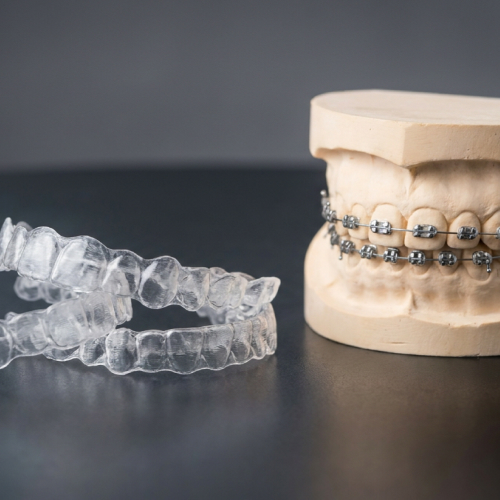
Traditional braces still outperform clear aligners for complex cases. Harvard Health Publishing notes that adults at any life stage can benefit from orthodontic treatment, and that teeth continue shifting throughout life — making intervention worthwhile well beyond adolescence.
The genuine advantages:
The real trade-offs:
Treatment duration for adults typically runs 12 to 30 months, followed by retainer wear to maintain results. The investment in time pays off in bite function, hygiene ease, and confidence — outcomes that extend well beyond aesthetics.
If you're weighing traditional braces — or want to know which orthodontic option fits your specific bite, schedule, and lifestyle — Nu Dentistry Tanglewood is here to help. Our team serves patients across Houston, including Tanglewood and Uptown, and we're happy to walk through your options in a no-pressure consultation. We also offer dental sedation for patients who experience anxiety around dental procedures, so comfort is never a barrier to getting the care you need. Reach out today to get started.
Medical disclaimer: This article is intended for informational purposes only and does not constitute professional dental or medical advice. Please consult a licensed dental provider for diagnosis and treatment recommendations specific to your situation.
Fresh news from the dental world
SEE WHAT A VISIT TO OUR MODERN, STATE-OF-THE-ART DENTIST OFFICE IS LIKE!
Monday - Friday 9am - 6pm
Saturday 9am - 3pm
Sunday Closed
Check out what our patients are saying in Houston, TX


“Never Thought I'd Say It”
I never thought I’d say it, but going to the dentist is actually fun now. I recently came in for a root canal, and I got to sit back and catch up on Stranger Things without any pain!

“The Best Dentist In Houston”
We have been looking for a family dentist for a long time. Not too long ago we met Dr. Ali. Not only was he professional, kind, and gentle, but he always finds a way to fit us in when we need an appointment. He’s also pretty funny! I appreciate that he takes the time to explain what he’s doing, before he does it. That really puts me at ease.

“Anxiety Has Kept Me Away ”
I usually have such huge anxiety when I go to a dentist appointment, which means I always put off visits until the last minute to disastrous consequences. However, Dr. Loggins helped me with sedation, so the entire process was a breeze!

“Part Of The Family”
When I come in for an exam, Dr. Alrajab makes me feel like I’m a part of his family. I haven’t had a single cavity or filling done since I started coming here, which is a real change from my last hygienist.
“Never Thought I'd Say It”
I never thought I’d say it, but going to the dentist is actually fun now. I recently came in for a root canal, and I got to sit back and catch up on Stranger Things without any pain!
“The Best Dentist In Houston”
We have been looking for a family dentist for a long time. Not too long ago we met Dr. Ali. Not only was he professional, kind, and gentle, but he always finds a way to fit us in when we need an appointment. He’s also pretty funny! I appreciate that he takes the time to explain what he’s doing, before he does it. That really puts me at ease.
We are proud members of these dental organizations and accreditations


Check us out and follow our Houston, TX practice on social media...


