Medically Reviewed by Dr. Ali Tameemi
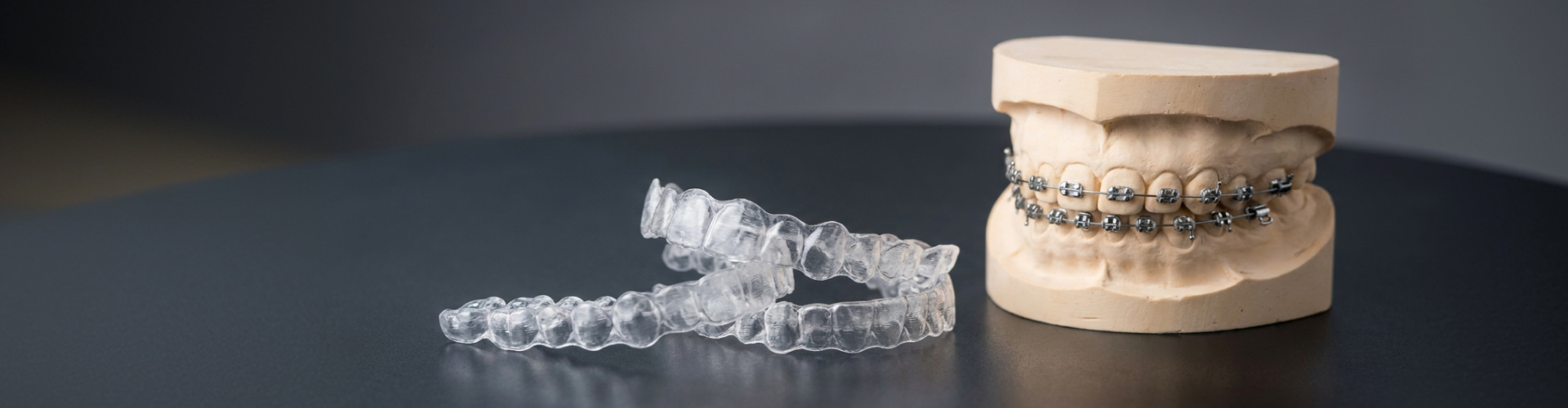
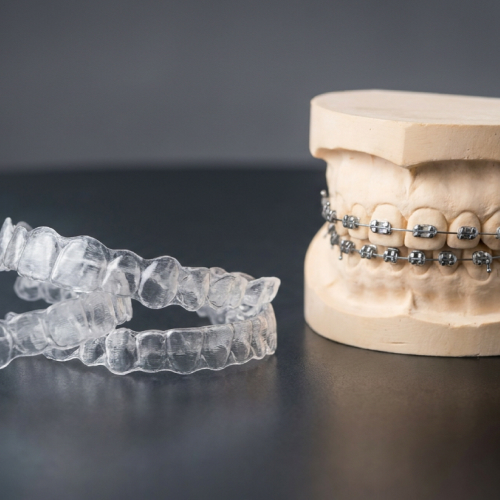
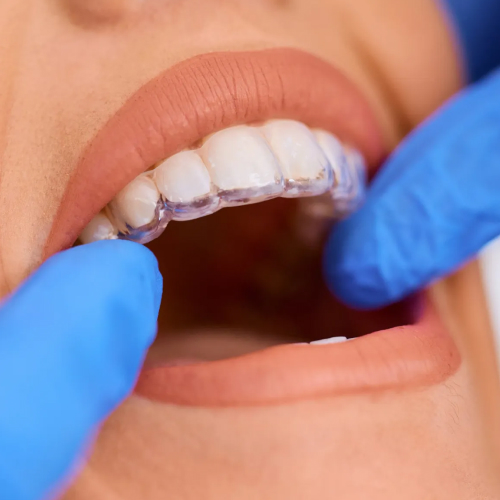
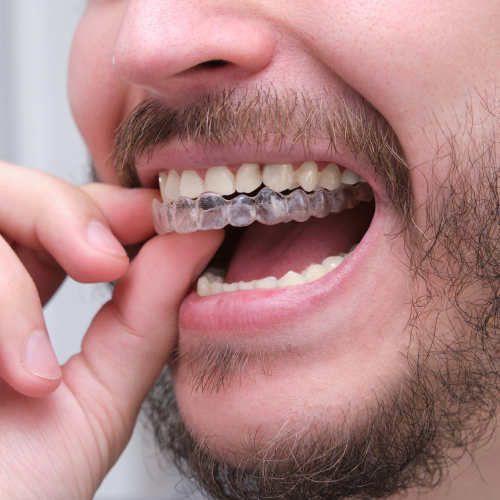
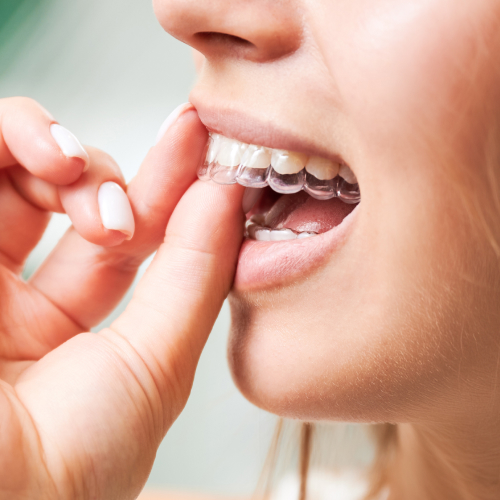
No single aligner brand wins for every patient — the right choice depends on your tooth movements, lifestyle, and how your specific aligner material holds up over time. This guide breaks down the real differences between Spark, Invisalign, ClearCorrect, and traditional braces so you can walk into your consultation already informed. For patients weighing all their options, aesthetic dentistry encompasses far more than just straightening — and understanding the full picture helps you make a smarter decision.
The Plastic Nobody Talks About: How SmartTrack, TruGEN, and ClearQuartz Actually Perform
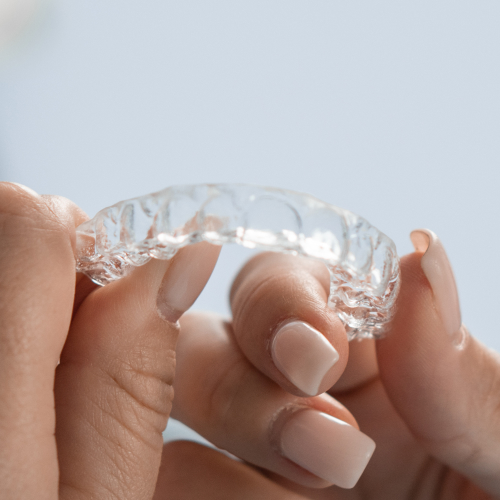
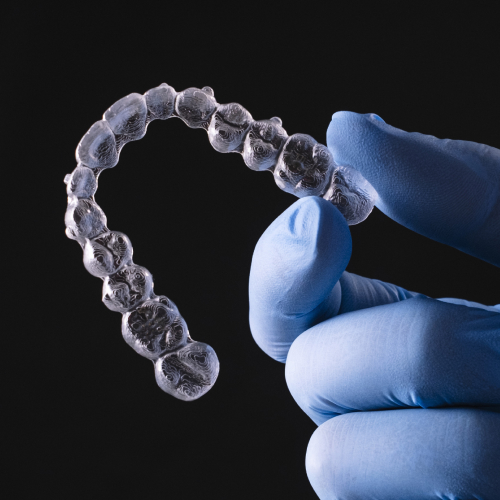
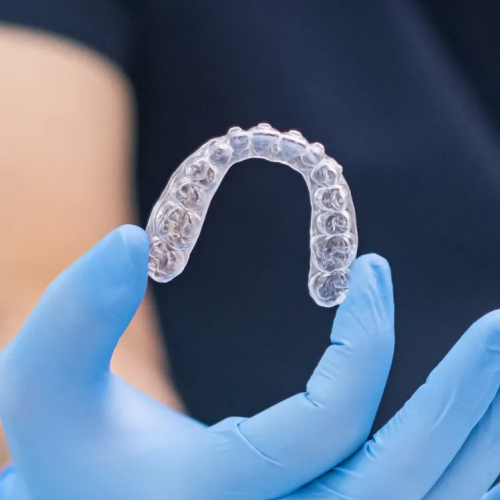
Most comparisons stop at "they're all medical-grade clear plastic." That's not very useful. For Houston-area patients, each brand's proprietary polymer behaves differently across a 7–14 day wear cycle — and those differences matter most for patients who grind their teeth or drink coffee daily.
Invisalign's SmartTrack material is the most widely studied. It applies consistent force and is generally comfortable. However, under heavy clenching or bruxism, SmartTrack can lose elastic recovery more quickly as the wear cycle progresses, meaning the aligner may seat less precisely toward the end of the two-week period.
Spark's TruGEN polymer is engineered with stain resistance as a core feature. Patients who regularly drink coffee, tea, or red wine often report that TruGEN aligners stay clearer longer than SmartTrack over the same wear period. This isn't trivial — a visibly yellowed aligner defeats the purpose of "invisible" treatment.
ClearCorrect's ClearQuartz uses a multi-layer construction that resists micro-cracking better than single-layer alternatives. For patients who clench or grind, this structural integrity means the aligner is less likely to develop stress fractures at the edges, which can create sharp surfaces and compromise fit.
No material is universally superior. Your habits — grinding, coffee consumption, wear compliance — should factor into which brand your provider recommends. As Healthline notes, wearing aligners 20–22 hours per day is critical regardless of brand, and material durability directly supports that compliance window.
The Trim-Line Trade-Off: How Aligner Design Determines Visible Attachments
Here's a detail most comparison articles skip entirely: aligner trim-line design. This single engineering choice affects how many composite "buttons" — attachments bonded directly to your visible front teeth — you'll actually need during treatment.
Invisalign and Spark both use a scalloped trim-line that follows the natural curve of your gumline. ClearCorrect uses a straight-cut trim-line that extends slightly above the gumline onto gum tissue. This flat design creates up to 2.5x more retention surface against the tooth, which means the aligner grips more securely on its own.
Why does that matter? More intrinsic retention from the trim-line means your provider may need fewer composite attachments on your front teeth to achieve the same tooth movement. Attachments are small tooth-colored bumps, but they are visible up close — especially on canines and central incisors. Patients who prioritize a cleaner aesthetic during treatment may find ClearCorrect's design advantageous for exactly this reason. Patients who want to go further after treatment often explore options like porcelain veneers to refine the final result.
Invisalign and Spark compensate with sophisticated attachment systems and SmartForce or SmartStage technology to achieve precise movements. Neither approach is objectively better — it's a genuine trade-off between retention method and individual aesthetic preference.
According to the University of Iowa College of Dentistry, the ADA acknowledges that aesthetic appeal is a major driver in clear aligner adoption — making the attachment question more relevant than most patients realize before starting treatment.
The 4 Tooth Movements Where Braces Still Win
WebMD confirms that clear aligners work for a wide range of adults and that treatment timelines vary with complexity. But "complexity" deserves a precise definition — because the vague claim that "braces handle severe cases better" leaves patients guessing.
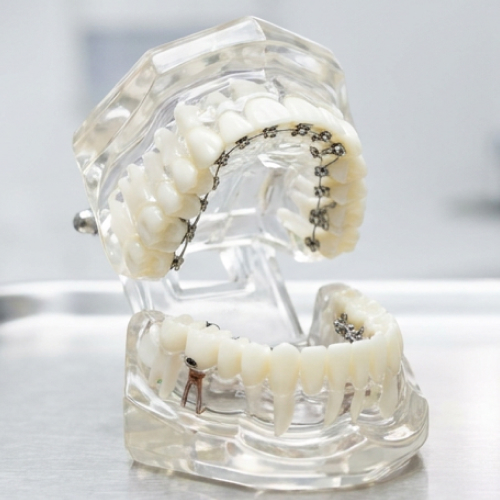
There are four specific biomechanical movements where aligners consistently underperform fixed braces:
-
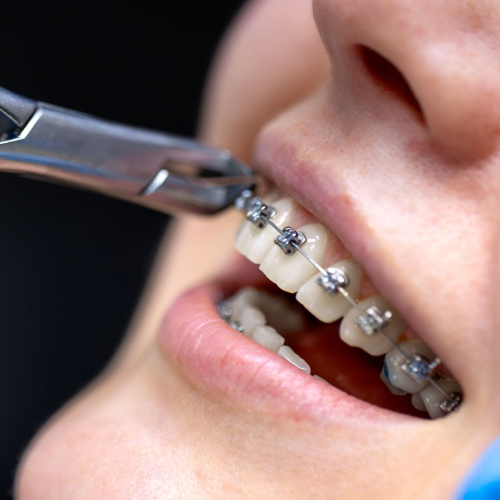
Bodily root movement (translation without tipping): Aligners tend to tip teeth rather than move the root and crown together as a unit. Braces apply force directly to the bracket at the crown and can use torquing mechanics to control root position simultaneously.
-
Canine extrusion: Pulling a tooth vertically out of the bone is mechanically difficult for a removable appliance. Braces with vertical elastics handle this far more predictably.
-
Premolar and canine rotations exceeding 30–45 degrees: Beyond this threshold, aligner tracking failure becomes clinically significant. The aligner can't grip enough tooth surface to rotate a round-rooted tooth reliably.
-
Closing extraction spaces without the "roller-coaster effect": When teeth are extracted to create space, adjacent teeth can tip into the gap rather than translate. Braces give providers precise control over that movement; aligners are prone to the tipping pattern even with attachments. In cases where a tooth cannot be saved, a tooth extraction may be necessary before any orthodontic treatment can begin.
A Healthline overview of aligners vs. braces confirms that traditional braces allow more precise control of complex adjustments — and for the four movements above, that precision is non-negotiable.
This doesn't mean aligners are inferior overall. For mild-to-moderate crowding, spacing, and bite correction, all three clear aligner brands produce excellent results. It means candidacy matters enormously, and an experienced provider — not a brand's marketing — determines which tool your case actually requires.
Adult Patients, Bone Density, and Setting Realistic Timelines
One of the most common questions from adults considering aligners: is it too late? The answer is no. WebMD explains that one in three orthodontic patients is an adult, and teeth move under sustained pressure regardless of age. Adults do have greater bone density than teenagers, which can extend treatment timelines — the average clear aligner treatment runs approximately 22 months, though simpler cases may show visible changes in as little as six months.
Adults also arrive with more pre-existing dental considerations: gum recession, missing teeth, or prior restorations. These factors influence which aligner system — or whether fixed braces — is most appropriate. Unaddressed gum disease can complicate or delay orthodontic treatment, making it essential to resolve any periodontal issues before starting. Healthline's guide on Invisalign chewies highlights that proper aligner seating throughout treatment is essential for staying on schedule, a compliance point adults often manage better than teenagers precisely because the motivation is self-driven.
The bottom line across all three brands: compliance, candidacy, and clinical expertise matter more than brand loyalty. Maintaining regular cleaning and exam appointments throughout your orthodontic treatment helps catch any emerging issues early and keeps your teeth and gums healthy as your smile shifts.
See What's Right for Your Smile at Nu Dentistry Tanglewood
Choosing between Spark, Invisalign, ClearCorrect, or traditional braces isn't a decision a comparison article can make for you — it requires a clinical evaluation. Nu Dentistry Tanglewood serves patients across Houston, including Tanglewood and Uptown, with personalized treatment planning that matches the right system to your actual tooth movements and lifestyle. If your smile needs restoration work alongside or after orthodontic treatment, options like dental implants can complete your results. Schedule a consultation and get a clear answer built around your smile.
Medical disclaimer: This article is for informational purposes only and does not constitute professional dental or medical advice. Always consult a licensed dental provider for diagnosis and treatment recommendations specific to your situation.