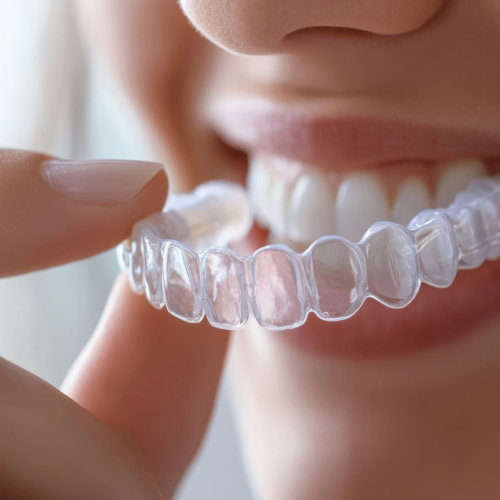
Why Your Invisalign Trays Aren't Fitting — and What to Do About It
Invisalign trays not fitting right in Houston? Learn why gaps happen, what tracking means, and when refinements are needed. Call Nu Dentistry Tanglewood.
Read More
Written by Dr. Ali Tameemi, DDS
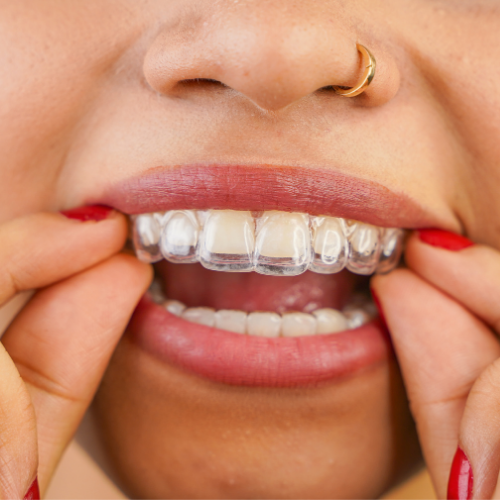
If you've ever pushed your Invisalign tray down and still felt a gap at the bottom, you're not alone. I hear this from patients in Houston — especially in the Tanglewood and Uptown areas — almost every week. Sometimes it's nothing to worry about. Sometimes it's a sign that your treatment needs a closer look. Either way, you deserve a straight answer, not a vague "just keep wearing them." At Nu Dentistry Tanglewood, we walk through these concerns with patients regularly, and I want to break it down clearly: what causes poor tray fit, what "tracking" actually means, and when refinements come into play.
Honestly, this question comes up more than almost anything else with Invisalign patients. You put in a new tray, you press it down, and there's still a visible gap along the back teeth or the lower edge. Frustrating.
Here's the thing — some gap is actually normal. Research using microCT imaging shows that Invisalign aligners have an average gap width of around 269 micrometers between the tray and the tooth surface, according to a peer-reviewed study. That's microscopic, but measurable. It doesn't mean your treatment is failing.
But a gap you can feel or see? That's different.
A few common reasons this happens:
You just switched to a new tray. Thermoplastic aligners are rigid when fresh. They need intraoral wear time to adapt to your mouth. Studies show that 15 days of wear produces the best tray-to-tooth adaptation — meaning the tray gradually conforms as your body heat softens it slightly.
Your attachments aren't engaging properly. Those small tooth-colored bumps on your teeth? They help anchor the tray and guide movement. If the tray isn't snapping around them correctly, the fit suffers.
The tray was deformed before it reached you. Actually, scratch that — it's not always handling damage. Sometimes repeated fitting and removal during manufacturing or packaging can subtly alter the aligner shape before you even open the box.
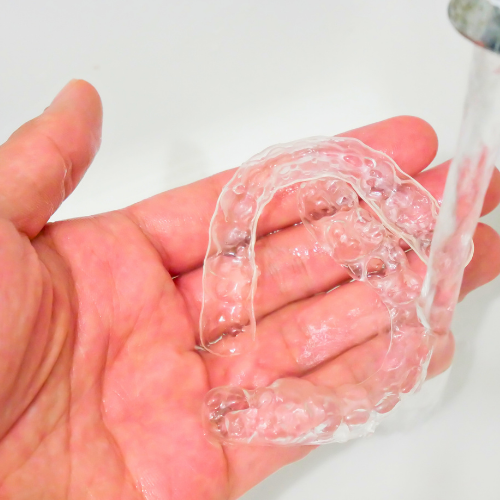
Heat exposure. Leaving trays in a hot car, drinking coffee without removing them — both warp the plastic. And a warped tray won't fit right, no matter how hard you press.
I had a patient last month who kept feeling a gap on their lower right side. Turned out they'd been rinsing their trays with hot water every night. Simple fix, but it had been dragging on for weeks.
The best tool for closing that gap? A chewable aligner seating device. Bite down on it for a few minutes, a few times a day. It helps the tray seat fully against your teeth. And if the gap persists past a few days — call us.
"Tracking" is the term your orthodontist uses to describe how well your teeth are actually moving compared to the digital plan. Every Invisalign case is mapped out in ClinCheck® software — a precise, stage-by-stage blueprint of where each tooth should be at each tray change.
Good tracking means your teeth are hitting those targets. Off-track means they're not.
How do you know? Look, it's not always obvious from the inside. But some signs include:
I'm not 100% sure why, but my theory is that most patients notice tracking issues as a vague feeling that "something's off" before they can put it into words. Trust that instinct.
The biggest driver of tracking problems is compliance. Aligners need 20–22 hours of wear per day. Drop below that consistently, and your teeth simply don't move on schedule. The tray designed for week four arrives, but your teeth are still at week two. Gap.
But compliance isn't the only factor. Complex tooth movements — rotations, vertical shifts, arch expansion — are harder to track predictably than simple tipping or spacing corrections. Houston patients with more involved cases sometimes need closer monitoring.
Digital monitoring tools now let some practices track progress remotely using smartphone photos. We assess tray fit and tooth position between visits, catching deviations early. And early intervention is always easier than course-correcting later.
Bottom line? If your trays aren't fitting snugly and the problem isn't resolving, you're probably off-track. Don't wait.
Refinements are additional aligner sets made after your initial series ends — or sometimes mid-treatment — to correct whatever didn't move exactly as planned.
And here's a number that surprises most people: roughly 94% of Invisalign patients need at least one refinement. That's not a failure. That's just biology. Teeth don't always follow a digital plan with perfect obedience.
The average patient goes through about 2–3 refinement scans, and treatment ends up running roughly five months longer than the original estimate. Which, fair enough — mouths are complicated.
Here's how it works: once you've finished your initial aligner series (or reached a checkpoint), your provider takes new digital scans or impressions. Those are used to fabricate a fresh set of aligners targeting the remaining movement. The process repeats if needed.
One refinement usually makes a meaningful difference — research shows improvement rates of 64–78% after the first refinement, depending on case complexity. But after four or more refinements? The returns diminish noticeably.
Not always a problem. Sometimes one round gets you there.
The cases that need the most refinements tend to involve complex bite corrections, significant rotations, or situations where the patient's compliance wavered during the initial series. Older patients may also need slightly more refinement passes — though the research on that is still developing.
Here's my slightly controversial opinion: I think Invisalign companies could be more upfront with patients about the likelihood of refinements from the start. Too many people feel blindsided when their "6-month treatment" turns into 14 months. Setting honest expectations matters — at least in my experience working with patients across Houston.
The good news? Most refinements are included in your original Invisalign contract. Always confirm that before you start.
If your trays aren't fitting, you're questioning your tracking, or you've just finished your initial series and aren't sure what's next — come talk to us. At Nu Dentistry Tanglewood, we serve patients across Houston, including the Tanglewood and Uptown neighborhoods, and we take tray fit seriously. Dr. Ali Tameemi reviews every case personally and won't give you a shrug and a "keep wearing them." Reach out to Nu Dentistry Tanglewood and let's figure out exactly where your treatment stands — and what it takes to get you across the finish line.
This content is for informational purposes only and does not replace professional medical advice, diagnosis, or treatment. Always consult with a qualified healthcare provider.
Fresh news from the dental world


SEE WHAT A VISIT TO OUR MODERN, STATE-OF-THE-ART DENTIST OFFICE IS LIKE!


Monday - Friday 9am - 6pm
Saturday 9am - 3pm
Sunday Closed
Check out what our patients are saying in Houston, TX


“Never Thought I'd Say It”
I never thought I’d say it, but going to the dentist is actually fun now. I recently came in for a root canal, and I got to sit back and catch up on Stranger Things without any pain!

“Anxiety Has Kept Me Away ”
I usually have such huge anxiety when I go to a dentist appointment, which means I always put off visits until the last minute to disastrous consequences. However, Dr. Loggins helped me with sedation, so the entire process was a breeze!

“The Best Dentist In Houston”
We have been looking for a family dentist for a long time. Not too long ago we met Dr. Ali. Not only was he professional, kind, and gentle, but he always finds a way to fit us in when we need an appointment. He’s also pretty funny! I appreciate that he takes the time to explain what he’s doing, before he does it. That really puts me at ease.

“Part Of The Family”
When I come in for an exam, Dr. Alrajab makes me feel like I’m a part of his family. I haven’t had a single cavity or filling done since I started coming here, which is a real change from my last hygienist.
“Never Thought I'd Say It”
I never thought I’d say it, but going to the dentist is actually fun now. I recently came in for a root canal, and I got to sit back and catch up on Stranger Things without any pain!
“Anxiety Has Kept Me Away ”
I usually have such huge anxiety when I go to a dentist appointment, which means I always put off visits until the last minute to disastrous consequences. However, Dr. Loggins helped me with sedation, so the entire process was a breeze!
We are proud members of these dental organizations and accreditations


Check us out and follow our Houston, TX practice on social media...


