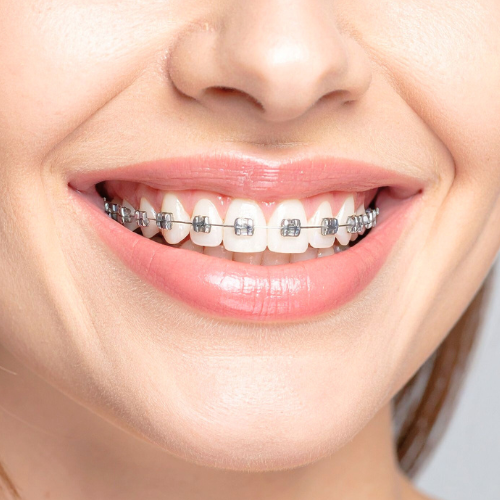
Braces Are a Commitment, Not a Punishment: What to Expect and How to Thrive
Learn how braces work, what to eat, and what discomfort feels like. Schedule a braces consult at Nu Dentistry Tanglewood.
Read More
If you have ever thought about braces, you have probably pictured a long, annoying process filled with sore teeth, food stuck everywhere, and endless appointments.
The truth is, braces are much more practical than people expect. Yes, they take time, and yes, there is an adjustment period. But for many people, the biggest surprise is how quickly braces become normal life.
Braces are not just about straight teeth for photos. They can help correct bite problems, improve how teeth function together, and make it easier to keep your mouth clean long-term. And when you know what the process is actually like, it feels a lot less intimidating.
In this article, we will walk through what braces do, what the experience feels like day to day, and how to make the whole thing easier from week one.
If you are considering braces in Houston, the best first step is a consultation. At Nu Dentistry Tanglewood, we will talk through your goals, evaluate your bite, and map out a plan that fits your life.
A lot of adults and teens delay braces because they think their teeth are “not bad enough.” But small issues can still create long-term consequences, especially when the bite is off or teeth are crowded.
Braces can help with:
And beyond function, there is the confidence piece too. People often say the biggest change is not just their smile. It is how they show up in conversations, photos, and even at work.
Getting braces is usually straightforward. The bigger moment is the first week afterward, because your mouth is adapting.
Here is what most people experience early on:
Day 1 to Day 3: You feel pressure and tenderness when chewing.
Day 4 to Day 7: Your mouth starts adjusting, but you may still feel soreness.
Week 2: You are typically back to regular life with a few habits changed.
A few small tools can make a big difference, like orthodontic wax, a soft toothbrush, and a plan for what to eat the first few days. We will cover all of that below.
Braces are not one-size-fits-all, so timing depends on what needs to be corrected. That said, most people can expect braces treatment to fall into a few common ranges.
Most braces treatment times look like this:
It is normal to see changes early, sometimes within the first few months. That is exciting, but it can also be misleading. Early changes are often the “easy movement.” The later phase is about getting the bite stable and the teeth positioned correctly so results last.
What affects how long braces take?
One of the most helpful things you can do is keep your appointments and follow instructions closely. Braces are doing the work, but consistency makes treatment smoother and often faster.
Braces do not usually cause sharp pain, but they often cause soreness and pressure, especially when something changes, like new wires or adjustments.
Here is what “braces hurt” usually means:
For most people, soreness is strongest for 2 to 4 days after getting braces or after an adjustment. It typically fades within a week.
Tips that actually help with braces soreness:
A quick reassurance: soreness usually means the braces are doing their job. If you ever feel severe pain, or something feels wrong like a poking wire you cannot manage, call the office. That is what we are here for.
Food is one of the biggest lifestyle changes with braces. Not because you cannot enjoy meals, but because certain foods are more likely to break brackets, bend wires, or get trapped in ways that make cleaning harder.
Foods to avoid with braces:
This does not mean you can never have them. It means you need to change how you eat them.
Better ways to eat common favorites:
Braces-friendly foods that make life easier:
A simple rule helps: if it is hard enough to crack a bracket, it probably will.
Braces can make it easier for plaque to hide. If you are not careful, you can finish treatment with straight teeth and still deal with inflamed gums or white spots on enamel.
The goal is to come out of braces with a healthy smile, not just a straight one.
Daily habits that matter with braces:
If you feel like cleaning around braces is a struggle, tell us. Most people just need a few technique adjustments and the right tools.
Braces come with little “moments,” and most of them are totally normal. Still, it helps to know what should prompt a call.
Normal:
Call Nu Dentistry Tanglewood if:
Braces are a process, but it does not have to feel overwhelming. When you know what to expect, the experience becomes manageable, and honestly, kind of satisfying. You can track progress, build good habits, and watch your smile change month by month.
If you are thinking about braces, let’s talk. Schedule an appointment at Nu Dentistry Tanglewood to see what braces could look like for you, how long treatment may take, and what your best options are.
Fresh news from the dental world



SEE WHAT A VISIT TO OUR MODERN, STATE-OF-THE-ART DENTIST OFFICE IS LIKE!


Monday - Friday 9am - 6pm
Saturday 9am - 3pm
Sunday Closed
Check out what our patients are saying in Houston, TX


“Never Thought I'd Say It”
I never thought I’d say it, but going to the dentist is actually fun now. I recently came in for a root canal, and I got to sit back and catch up on Stranger Things without any pain!

“Anxiety Has Kept Me Away ”
I usually have such huge anxiety when I go to a dentist appointment, which means I always put off visits until the last minute to disastrous consequences. However, Dr. Loggins helped me with sedation, so the entire process was a breeze!

“The Best Dentist In Houston”
We have been looking for a family dentist for a long time. Not too long ago we met Dr. Ali. Not only was he professional, kind, and gentle, but he always finds a way to fit us in when we need an appointment. He’s also pretty funny! I appreciate that he takes the time to explain what he’s doing, before he does it. That really puts me at ease.

“Part Of The Family”
When I come in for an exam, Dr. Alrajab makes me feel like I’m a part of his family. I haven’t had a single cavity or filling done since I started coming here, which is a real change from my last hygienist.
“Never Thought I'd Say It”
I never thought I’d say it, but going to the dentist is actually fun now. I recently came in for a root canal, and I got to sit back and catch up on Stranger Things without any pain!
“Anxiety Has Kept Me Away ”
I usually have such huge anxiety when I go to a dentist appointment, which means I always put off visits until the last minute to disastrous consequences. However, Dr. Loggins helped me with sedation, so the entire process was a breeze!
We are proud members of these dental organizations and accreditations


Check us out and follow our Houston, TX practice on social media...


