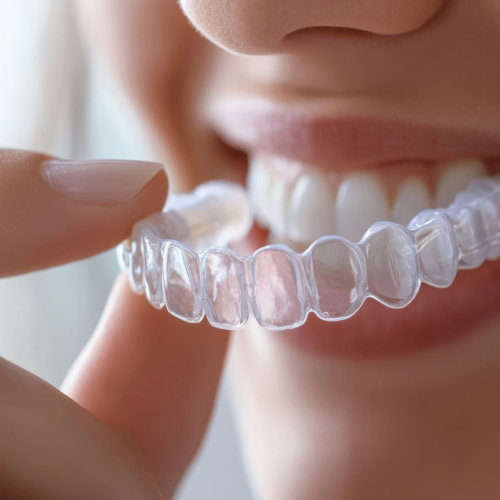
Why Your Invisalign Trays Aren't Fitting — and What to Do About It
Invisalign trays not fitting right in Houston? Learn why gaps happen, what tracking means, and when refinements are needed. Call Nu Dentistry Tanglewood.
Read More
A healthy smile can mean so much more than just looking good! Cavities are one of the most common dental problems, affecting people of all ages and backgrounds. While they may seem small and inconsequential, cavities can lead to toothaches, infection, and even tooth loss if left untreated. But don't worry, with the right knowledge and care, you can bite back at cavities and keep your smile healthy and strong. In this blog post, we'll be exploring the causes, symptoms, and solutions for dental decay, giving you all the tools you need to keep your teeth in tip-top shape.
A cavity, also known as dental caries, is a small hole in your tooth that is caused by the breakdown of the enamel and dentin. Your teeth are made up of several layers, including the enamel (the outermost layer), the dentin (the layer underneath the enamel), and the pulp (the innermost layer that contains nerves and blood vessels). A cavity occurs when the bacteria in your mouth produce acid that erodes the enamel and dentin, creating a hole in your tooth.
It's important to understand that cavities are not just cosmetic issues, they can cause serious dental problems if left untreated. As the cavity gets larger, it can reach the pulp of your tooth and cause an infection, leading to pain, swelling, and even tooth loss. In extreme cases, untreated cavities can spread to other parts of your mouth and lead to more serious health problems.
So, what causes cavities in the first place? While genetics, age, and other factors can play a role, the most common cause of cavities is poor oral hygiene. When you eat or drink sugary or starchy foods, the bacteria in your mouth produce acid that attacks your teeth. Over time, this acid erodes the enamel and dentin, creating a cavity. If you don't brush your teeth regularly and properly, the bacteria can continue to produce acid and the cavity can get larger.
If a cavity is left untreated, it can lead to a range of serious dental problems. Here are a few of the most common consequences of ignoring a cavity:
It's important to remember that cavities are preventable, and treating them early can prevent these and other problems from developing. Regular dental check-ups, good oral hygiene practices, and a healthy diet can help you keep your teeth healthy and cavity-free.
Ignoring a cavity can lead to a range of serious dental problems, including pain, discomfort, tooth loss, infection, and even long-term health issues. By treating cavities early, you can protect your smile and avoid these problems down the line.
A filling is a common dental procedure used to repair a cavity and restore the strength and functionality of your tooth. Fillings are made of materials such as composite resin, amalgam (a mixture of metals), or ceramic, which are used to fill the hole caused by the cavity. The filling material is carefully shaped and molded to match the shape of your tooth, then cured and polished to create a smooth, natural-looking surface.
Fillings are a simple, fast, and effective solution to cavities and can help prevent more serious dental problems from developing. They are typically performed in a single visit to the dentist, and the procedure itself is usually painless, with local anesthesia used to numb the area around the affected tooth.
The type of filling you receive will depend on several factors, including the size and location of the cavity, your dental history, and your personal preferences. Your dentist will work with you to determine the best type of filling for your needs, taking into consideration your budget, the function of the tooth, and your desired aesthetic outcome.
Not all cavities require a filling, but it is important to seek dental treatment as soon as possible if you suspect you have a cavity. Your dentist will be able to diagnose the cavity and determine the best course of action for you.
In some cases, cavities may be small and not causing any symptoms, and your dentist may choose to monitor the cavity and wait to see if it progresses. In other cases, the cavity may be too large or painful to ignore, and your dentist may recommend a filling to repair the damage and prevent the cavity from getting worse.
In general, fillings are recommended when a cavity has reached a certain size, as smaller cavities may not cause any symptoms and may not require immediate treatment. However, it is important to catch cavities early, as they can grow larger and cause more serious problems if left untreated.
It's also worth noting that there are other options for treating cavities, such as inlays and onlays, which are similar to fillings but cover a larger area of the tooth. In some cases, a crown (a type of cap that covers the entire tooth) may be recommended if the cavity is too large to be treated with a filling.
In conclusion, cavities are a common dental issue that can be easily prevented and treated. By understanding the causes, symptoms, and solutions for dental decay, you can take control of your oral health and protect your smile. Regular dental check-ups, good oral hygiene habits, and a healthy diet are key to preventing cavities and maintaining a healthy smile.
If you suspect you have a cavity or if it's been a while since your last dental check-up, we encourage you to schedule an appointment with your dentist today. Early detection and treatment are essential to preventing more serious dental problems from developing and protecting your smile for years to come.
At our dental clinic, we are dedicated to providing comprehensive, high-quality dental care to help you maintain a healthy and beautiful smile. Our team of experienced dentists and dental professionals is here to help you every step of the way, from preventive care to advanced restorative treatments.
So what are you waiting for? Bite back at cavities and schedule your appointment today!
Fresh news from the dental world





SEE WHAT A VISIT TO OUR MODERN, STATE-OF-THE-ART DENTIST OFFICE IS LIKE!


Monday - Friday 9am - 6pm
Saturday 9am - 3pm
Sunday Closed
Check out what our patients are saying in Houston, TX


“Never Thought I'd Say It”
I never thought I’d say it, but going to the dentist is actually fun now. I recently came in for a root canal, and I got to sit back and catch up on Stranger Things without any pain!

“Anxiety Has Kept Me Away ”
I usually have such huge anxiety when I go to a dentist appointment, which means I always put off visits until the last minute to disastrous consequences. However, Dr. Loggins helped me with sedation, so the entire process was a breeze!

“The Best Dentist In Houston”
We have been looking for a family dentist for a long time. Not too long ago we met Dr. Ali. Not only was he professional, kind, and gentle, but he always finds a way to fit us in when we need an appointment. He’s also pretty funny! I appreciate that he takes the time to explain what he’s doing, before he does it. That really puts me at ease.

“Part Of The Family”
When I come in for an exam, Dr. Alrajab makes me feel like I’m a part of his family. I haven’t had a single cavity or filling done since I started coming here, which is a real change from my last hygienist.
“Never Thought I'd Say It”
I never thought I’d say it, but going to the dentist is actually fun now. I recently came in for a root canal, and I got to sit back and catch up on Stranger Things without any pain!
“Anxiety Has Kept Me Away ”
I usually have such huge anxiety when I go to a dentist appointment, which means I always put off visits until the last minute to disastrous consequences. However, Dr. Loggins helped me with sedation, so the entire process was a breeze!
We are proud members of these dental organizations and accreditations


Check us out and follow our Houston, TX practice on social media...


